The early days of our career are usually absorbed by task-driven activities. We get busy learning the ropes of finite and infinite tasks and we tend to gauge our abilities and measure our worth based on the technical demands of our work. Commitment and responsibility take a place in our hearts and expresses itself in our loyalty. Getting things done is a source of pride, and gives us a sense of accomplishment, so business processes predominate while the human experience escapes our focus.
Sooner or later we come to realize that our ability to accomplish work tasks is not enough to pave a successful career path; our relationships with people are critical components of our working lives. Regardless of what we do or where we work, people form a critical emotional component that make those places great.
Against this background of an ocean of career-advancing competencies and the “dos” & “hows” of achieving success, I want to share with you today four very basic points that could help to enhance our human experience in a work environment.
Teamwork
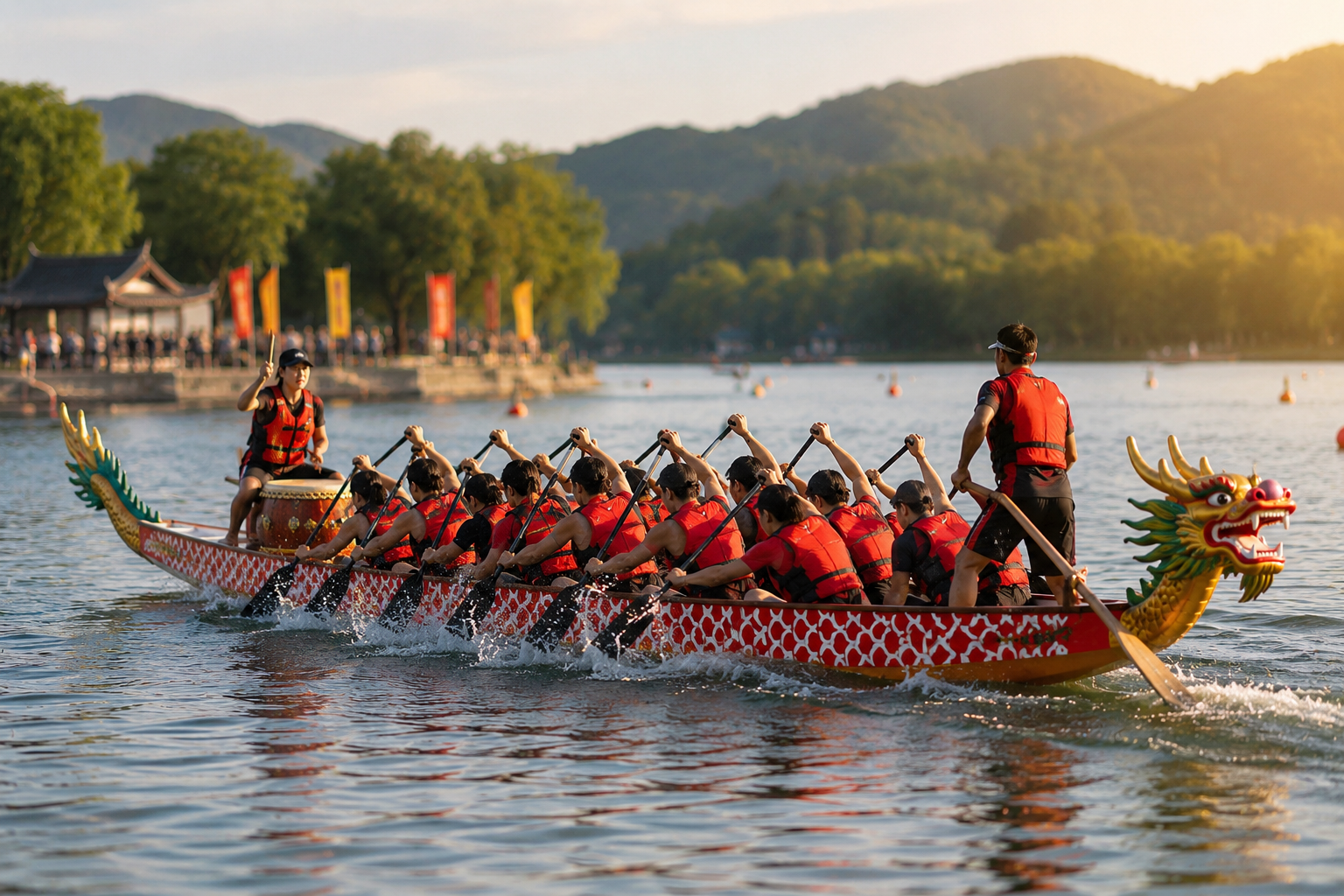
The sport of dragon boating has, in modern times, evolved into an international sport. It is a quintessential team sport, as to do it properly requires 20 people to do the same thing at the same time. It teaches commitment to a shared sense of purpose in which everyone’s contribution is equally necessary to win a race, and when done properly, it’s as harmonious as an orchestra and the boat almost flies through the water. In life, it is important for our psychological well-being to feel ourselves part of a team, part of a community in which our individual contributions are important, where we gladly support each other and receive others’ support in return. We build a healthy and enviable community based on trust.
Self-awareness
Self-awareness fosters good workplace relationships. It helps us manage our behaviors and optimize our personal strengths. We can benefit immensely from taking the time to observe ourselves and reflect on how and why we react and respond to others the way we do, to consider what shapes our values, to ponder why we are engaged in our particular line of work, and what it gives us and what it takes away from our lives. Our attitude towards our work and colleagues how we think and feel every day. If we intend to climb a mountain, we should know where the mountain top is, and how we need to prepare ourselves to reach there.
Inspiration
We all need inspiration to facilitate our personal growth. We should all look for someone whose life and way of being and working we admire and who would be willing to share his or her experience and knowledge to mentor our careers. Such a positive figure could influence us very deeply and increase the level of consciousness in our life. The majority of successful and distinguished figures, past and present, had the benefit of mentors who inspired them along the way and made a significant difference in their careers and their lives.
Leadership
As we mature in our careers, our roles expand and we have the opportunity to lead and mentor others. Others will depend on us for guidance, just as we relied on experienced colleagues to mentor us early in our careers when perhaps we had poor self-awareness, lacked a vision of the possibilities that lay ahead of us, went through a self-absorbed period when we had not yet learned how to be team players or ask for guidance, and lacked the refinement that comes with maturity. When you cross paths with these ambitious young people struggling to climb their personal career mountains, lend them a hand. A great leader is not afraid to reach out and help others find their better selves. Great leaders make a memorable difference in the lives of those they touch.
I would like to conclude with the following words from Lances Secretan: “Leadership is not so much about techniques and methods as it is about opening the heart. Leadership is about inspiration of oneself and of others. Great leadership is about human experience, not processes. Leadership is not a formula or a programme, it is an activity that comes from the heart and considers the heart of the others. It is an attitude, not a routine.”
This article was published in 2016.
Leave a Reply